Why Every Nurse Should Care About Environmental Health (Even If They Don’t Work in Public Health)
When I returned to graduate school in 2015 to earn my Master of Public Health – Environmental Health and Toxicology, I thought I was taking the next step to advance my career. What I didn’t realize was that the experience would completely change how I viewed the environment, healthcare, and my role as a nurse.
I had been out of nursing school since earning my Bachelor of Science in Nursing degree in 2006, and my goal was to increase my opportunities for career growth. Instead, I gained something much more valuable. I learned about the environmental challenges affecting my own community, environmental justice, and the disproportionate impact environmental hazards have on minorities and certain socioeconomic statuses.
I learned how pollution, improper waste disposal, and contaminated air, water, and soil contribute to higher rates of asthma, cancer, heart disease, and other chronic illnesses in certain communities. Many of the people affected don’t have the capability to move somewhere safer, whether that be due to finances, family commitments, or even the fact that their health has deteriorated significantly. That realization left me asking myself, How is this happening? Why is this happening? And what can nurses do to help?
Those questions sparked an interest that continues to shape my avocation today.
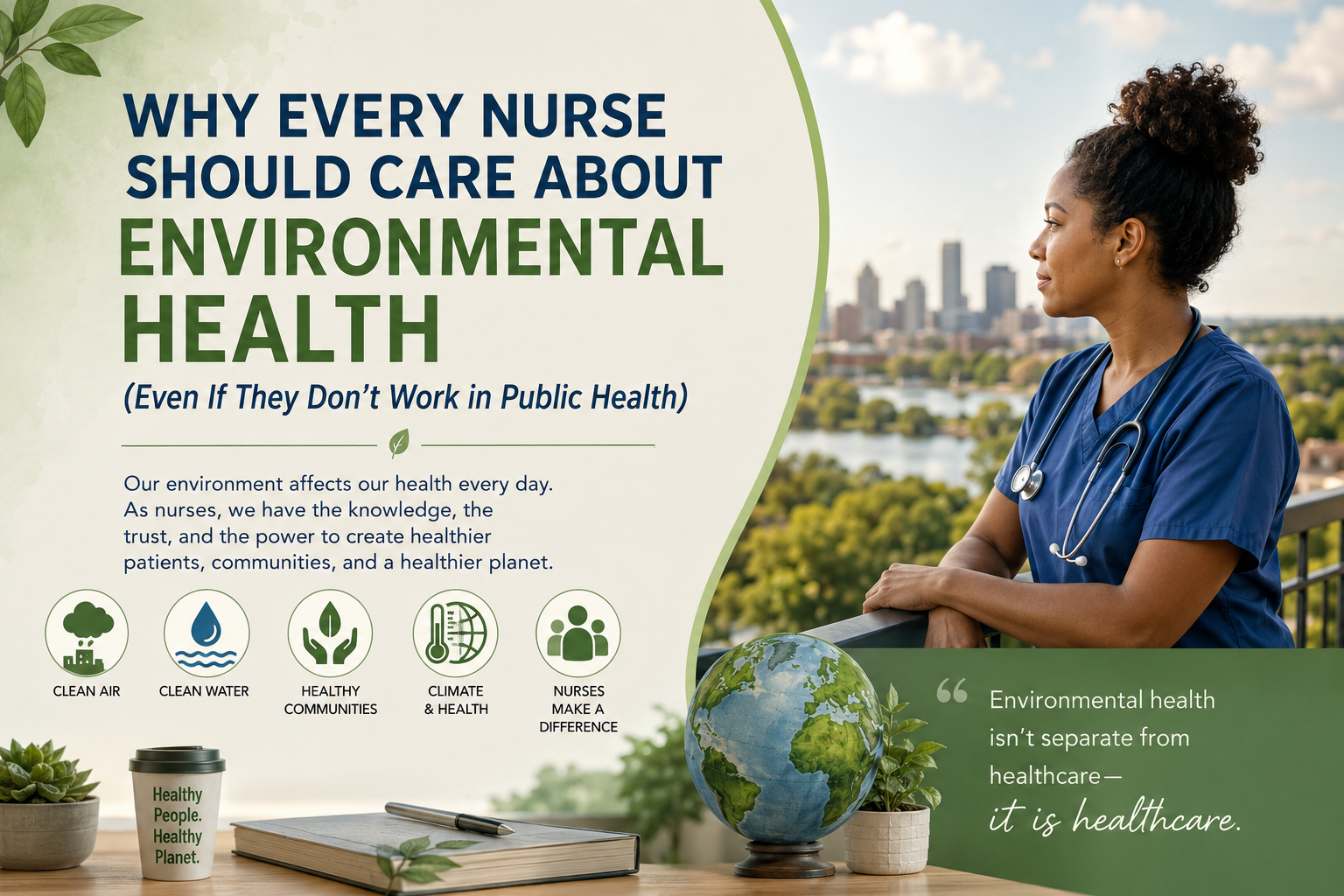
As a nurse with 20 years of experience, a Doctor of Nursing Practice (DNP), and a Master of Public Health (MPH) in Environmental Health and Toxicology, I’ve come to realize that environmental health isn’t a niche topic—it’s part of every nurse’s practice.
Our environment influences our health every single day. It isn’t limited to the outdoors. It includes the air we breathe inside our homes, the water we drink, the products we use, and the communities where we live, work, and play.
As one of the most trusted professions, nurses have a unique opportunity to educate patients, advocate for healthier communities, and recognize environmental factors that may contribute to illness. Whether we’re discussing ways to reduce occupational exposures, ensuring children receive recommended lead screening, or helping patients prepare for extreme heat events, environmental health is already part of nursing—we simply may not always realize it.
What Is Environmental Health?
Environmental health means different things to different people, but fundamentally, it focuses on how our surroundings influence our health.
The National Institute of Environmental Health Sciences (NIEHS) defines environmental health as:
“The science of identifying and understanding the impacts of environmental exposures to hazardous physical, chemical, and biological agents in air, water, soil, food, as well as social stressors that may adversely affect human health. The goal of environmental health is to prevent human injury and illness and promote well-being.”
Similarly, the American Public Health Association explains that environmental health centers on the relationship between people and their environment. When people are exposed to hazards such as polluted air or lead in drinking water, they may develop serious health conditions, including asthma, heart disease, cancer, and dementia.
Unfortunately, there are many misconceptions about environmental health. Some people believe that air pollution is only a concern in large urban cities, that harmful exposures are always visible, or that indoor air is automatically safer than outdoor air. In reality, environmental exposures can affect people regardless of where they live.
I’ll explore these myths—and many others—in future blog posts.
How Environmental Exposures Affect Patients
Environmental health is something healthcare professionals encounter every day.
Here are a few examples:
- Air pollution has been linked to asthma, heart disease, stroke, and other respiratory illnesses.
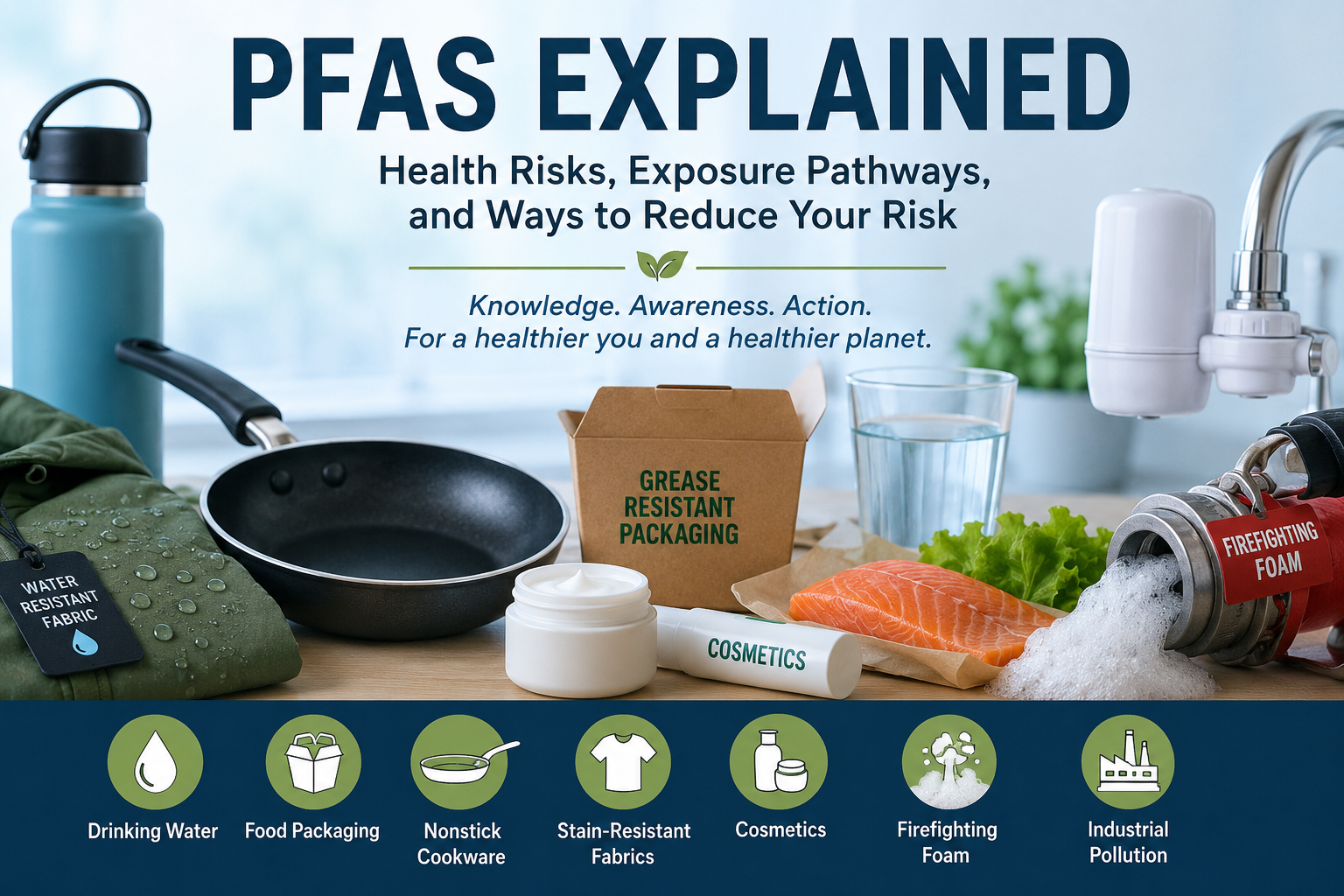
- PFAS (“forever chemicals”), which I discuss in Season 2 of The Environmentalist Nurse podcast, have been linked with several health concerns, including certain cancers, immune system effects, and elevated cholesterol.
- Extreme heat, the topic of an upcoming podcast episode, can lead to heat exhaustion, heat stroke, and worsening of chronic medical conditions.
- Lead exposure, especially in children, can affect brain development, learning, and behavior, making prevention and early screening a necessity.
These are only a few examples of how environmental exposures influence health across the lifespan. Throughout this blog and my podcast, I’ll take a deeper dive into each of these topics and discuss practical ways healthcare professionals and communities can reduce risk.
Why Nurses Are Uniquely Positioned to Make a Difference
Because we spend so much time educating patients and families, we are uniquely positioned to recognize environmental risks, answer questions, and encourage healthier choices.
Our influence extends beyond individual patient care. Nurses can:
- Educate patients about environmental exposures and prevention.
- Advocate for healthier communities.
- Participate in research.
- Promote sustainability within healthcare systems.
Environmental health is another way nurses can improve health outcomes—not only for individual patients but for entire communities.
What You’ll Find on This Blog
My goal is to make environmental health something that is not an afterthought.
Here you’ll find:
- Environmental health education
- Climate and health updates
- Evidence-based breakdowns of current research
- Practical tips for reducing environmental exposures
- Advocacy opportunities
- Information about fellowships, grants, and professional development
- Companion resources for The Environmentalist Nurse podcast
Whether you’re a nurse, other healthcare professional, student, or simply someone interested in creating healthier communities, I hope you’ll find information you can use in both your professional and personal life.
Final Thoughts
Every patient is affected by the environment in which they live, work, learn, and play. As healthcare professionals, we have an opportunity—and a responsibility—to help create healthier environments for everyone.
My hope is that this blog encourages you to look at health a little differently, one that recognizes that prevention doesn’t begin in the hospital or clinic. It begins in our homes, neighborhoods, schools, workplaces, and communities.
Together, we can build healthier people by creating healthier environments.
Stay Connected
If this topic resonates with you, I’d love to have you join the conversation.
- Subscribe below for future blog posts.
- Listen to The Environmentalist Nurse podcast.
- Connect with me on LinkedIn.
- Contact The Environmentalist Nurse Collective for writing, consulting, or speaking opportunities.
References
- National Institute of Environmental Health Sciences. Environmental Health Glossary.
- American Public Health Association. Environmental Health.
- World Health Organization. Climate Change, Heat and Health.
- Tisch Environmental. 5 Common Air Pollution Myths Debunked by Science.
About the Author
LaDonna Gaines, DNP, MPH, RN, is the founder of The Environmentalist Nurse Collective, LLC, where she provides evidence-based healthcare and environmental health writing, editing, consulting, and speaking services. With 20 years of nursing experience—including hematology/oncology, medical case management, toxicology/environmental health, and healthcare leadership—LaDonna is passionate about creating resources for healthcare professionals and the public.
She is also the host of The Environmentalist Nurse podcast, where she explores the intersection of nursing, environmental health, climate, toxicology, and public health through solo episodes and conversations with experts making a difference.
When she’s not writing or recording podcast episodes, you’ll likely find her volunteering in her community, caring for her growing collection of houseplants, spending time with her dog, or planning her next adventure.
Learn more and connect:
- 🎙️ Listen to The Environmentalist Nurse podcast
- ✍️ Explore healthcare writing and consulting services
- 💼 Connect with LaDonna on LinkedIn
- 📩 Contact The Environmentalist Nurse Collective